Instrument of craft: Leica
Leica M11-P Hammertone
A hammered finish from the age of industrial enamel, laid over the most modern M Leica makes, and over its purely mechanical sibling in the same week.
- Maker
- Leica
- Published
- November 12, 2026
Some finishes are decoration. Hammertone is a memory. The dimpled enamel that once covered machine housings and instrument cases, formed as metal pigments and additives shift the surface tension of the paint while it dries, arrived on 12 November 2026 on the two ends of Leica's M range at once: the digital M11-P and the fully mechanical M-A, both announced by Leica Camera AG and on sale worldwide the same day.
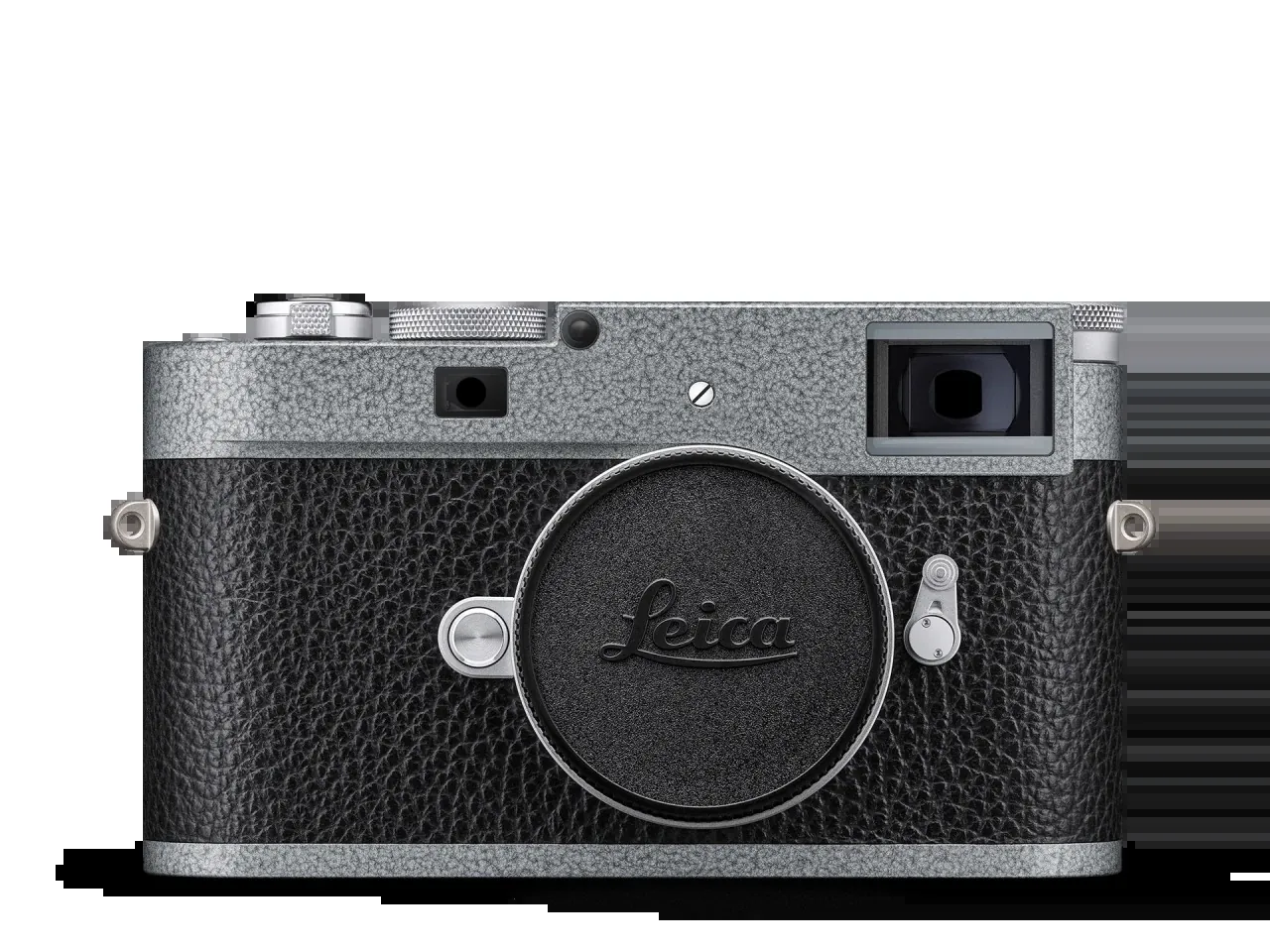
Leica has used the finish since the 1930s but kept it rare, and the company is candid about the lineage the new cameras join: the 1964 MD Hammertone, the 2003 MP LHSA, the 2011 M9 Hammertone and the 2016 M-A Vienna Edition. The historical references run deeper still, to the MD documentation cameras built for the Leitz Reprovit system and to an exceptionally rare MD of 1964, of which ten were made. The process has been reworked for these editions, and the finish is applied by the Leica Manufacture team at Wetzlar. Because the texture forms while the paint dries, no two bodies carry exactly the same surface. Each camera is, in the strictest sense, the only one of its pattern.
The finish sits on solid brass, on the top plate and the base plate of both cameras, with cross knurled controls, a shiny silver shutter release plate and a black vulcanite style leatherette with white engravings. The M11-P version adds newly rounded edges to its plates, in a classically styled profile, and a front screw finished in silver chrome.
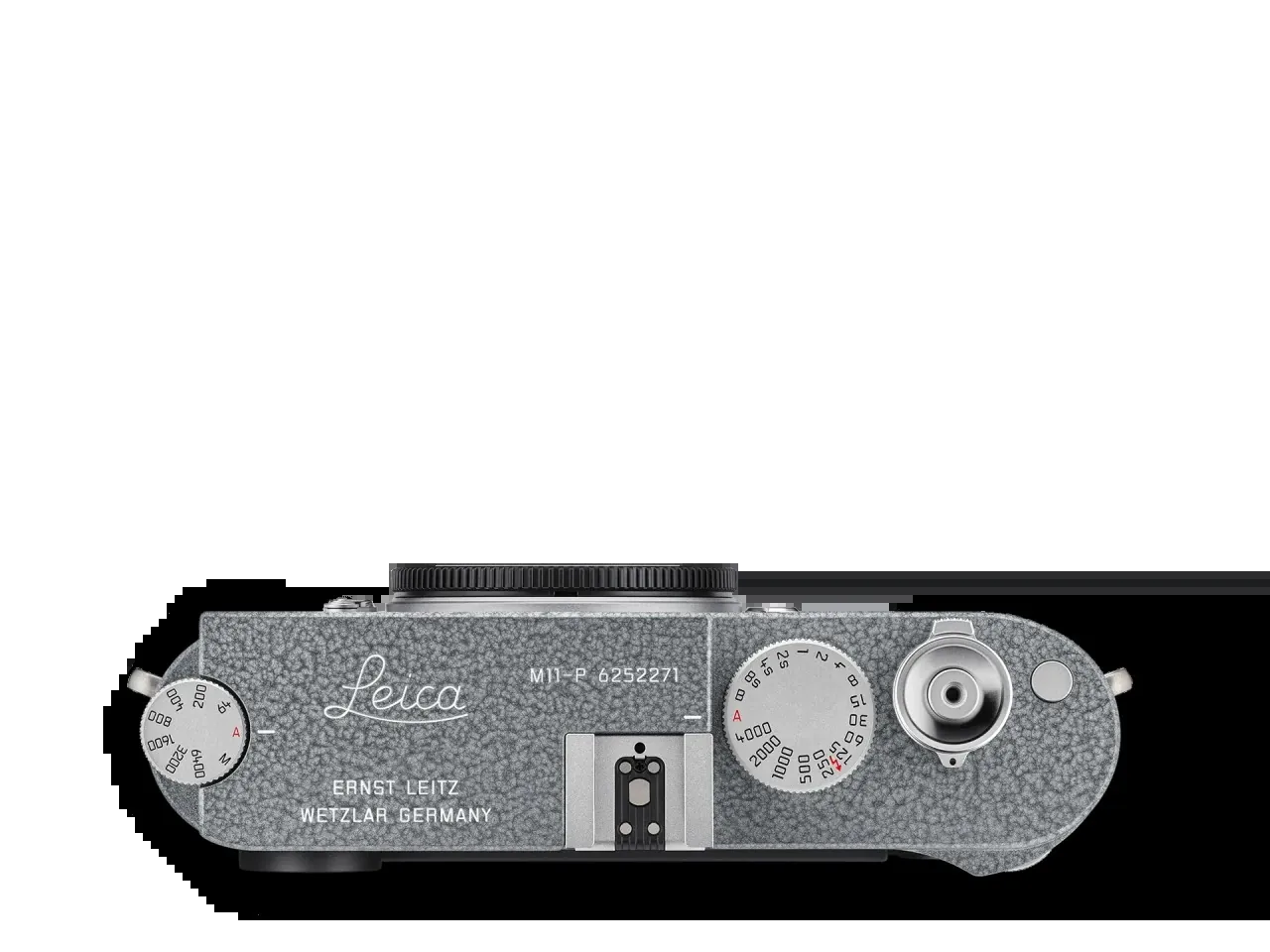
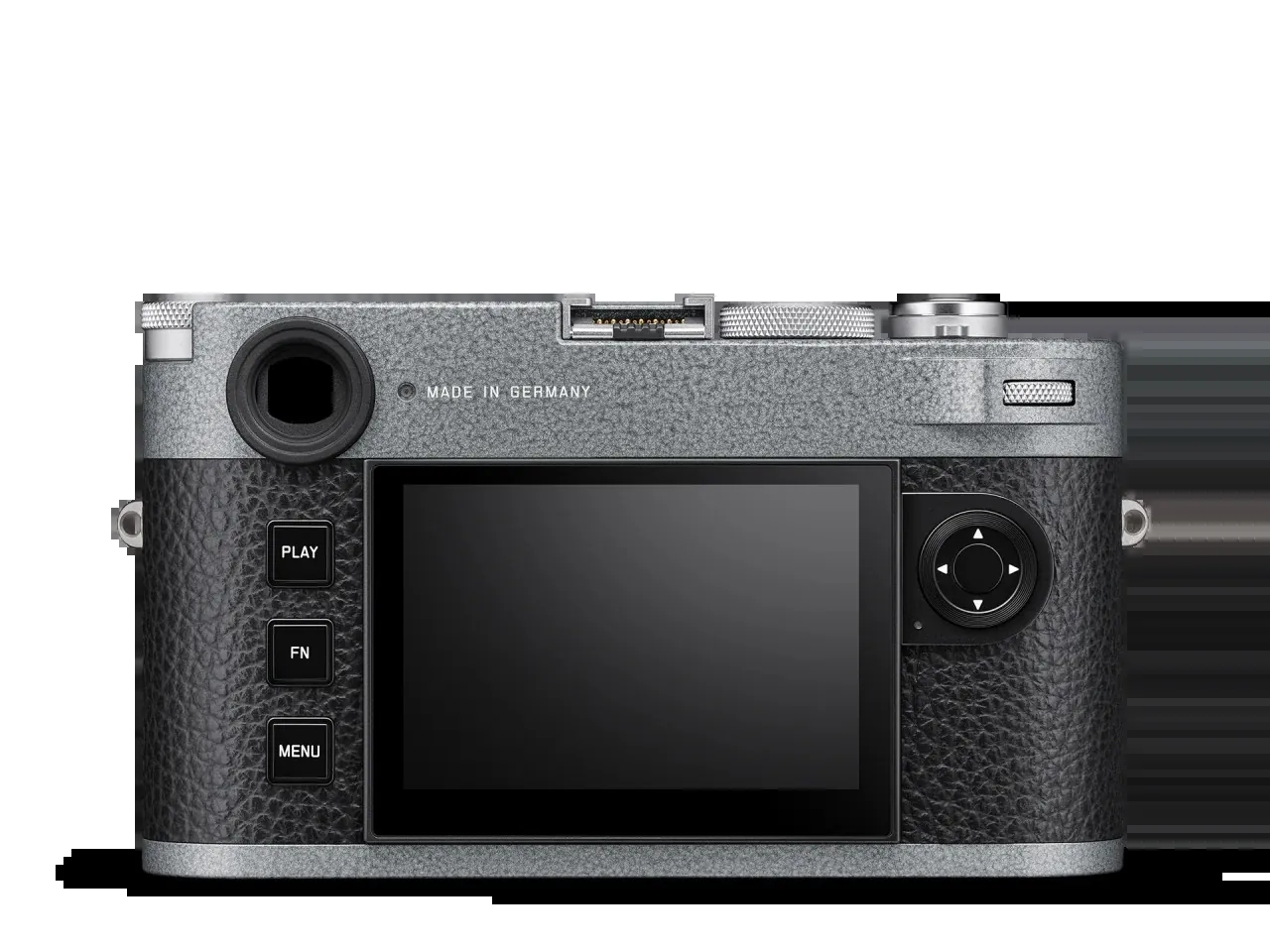
Under the enamel, the M11-P Hammertone is the standard M11-P, unchanged: a full frame BSI CMOS sensor with Triple Resolution Technology at 60, 36 or 18 megapixels, 256 GB of internal memory, a scratch resistant and anti reflective sapphire crystal screen, and connection to the Leica FOTOS app by Bluetooth, Wi-Fi or cable. Its signature system is Leica Content Credentials, which attaches verifiable proof of authorship, image attributes and editing steps to a file. Even the battery joins the edition: the package includes a BP-SCL7 finished in hammertone.
Who it serves: the rangefinder photographer who works slowly and keeps a camera for decades, and who wants the digital M's provenance tools wrapped in the tactile language of the mechanical era. Where it sits in the process: as the primary stills body on editorial and documentary days where the file's chain of authorship matters as much as its resolution.
The sibling matters to the story. The M-A Hammertone is a completely mechanical camera: aperture, film speed and shutter speed are all set by hand, with no electronics to consult. Leica aims it at photographers who want analogue photography in its purest form, and pairing its launch with the M11-P makes the edition's point plainly. The finish is the argument that the two cameras, one of film and springs, one of sensors and signatures, belong to a single craft tradition.
The dry note: a special finish changes nothing about exposure, focus or seeing, and Leica does not pretend otherwise. What it changes is the object's relationship to time. Hammertone was designed to wear well on things that get used hard. On an M body, that is not nostalgia. It is a specification.
Pricing is set at the linked page; confirm it there.