Features
Two Hundred Years, Under One Glass Roof
Paris Photo opens its 29th edition at the Grand Palais with the bicentenary of the medium as its organising idea: early processes at one end of the nave, phone-era experiments at the other.
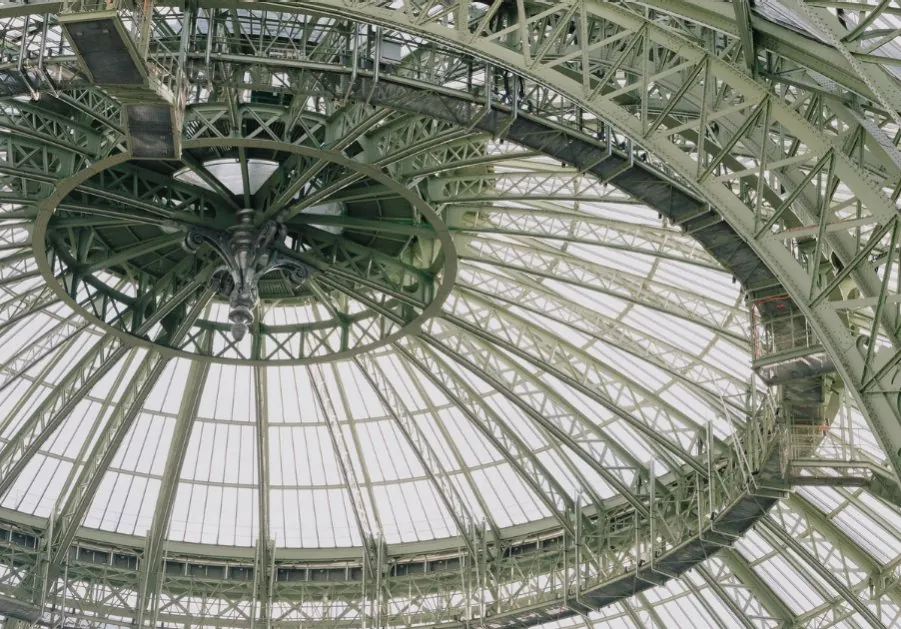
The dome does the first piece of curating. Before a single print registers, the glass roof of the Grand Palais has already made the fair's argument for it: photography belongs in a room built for looking up. Paris Photo opens its 29th edition there today, 12 November 2026, and runs to Sunday 15 November. The fair was founded in 1997, which makes this edition twenty nine years into its own history and, by the fair's chosen reckoning, two hundred years into the medium's. The bicentenary of photography is not a theme pasted onto this year's fair. It is the floor plan.
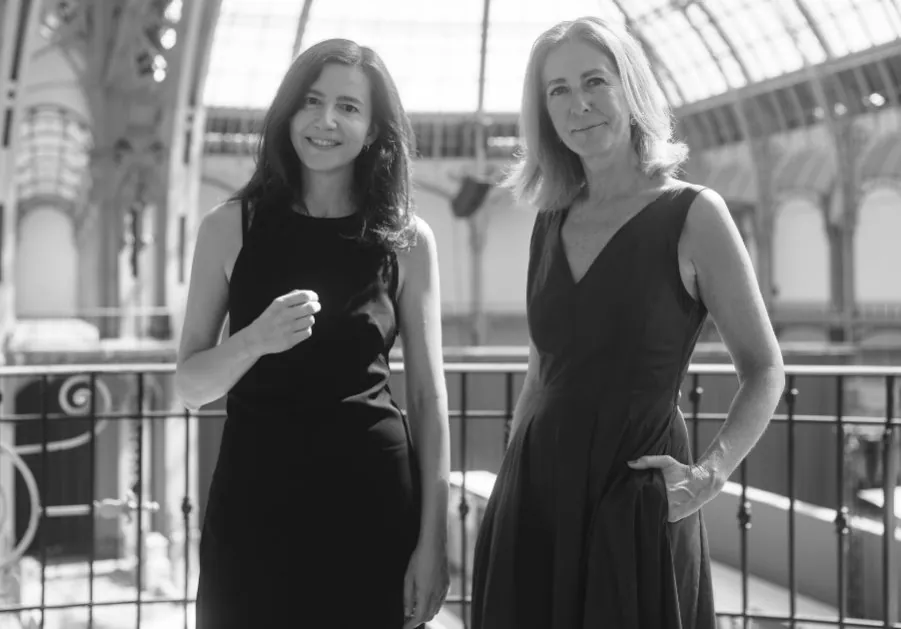
Florence Bourgeois directs the fair, and Anna Planas is its artistic director. Their programme is built as a conversation across the full length of the medium's life: historic prints and the newest image practices sharing one nave, with the fair's five sectors as the grammar. Main, which also carries the large scale Prismes projects, sits at the centre. Around it are Voices, Digital, Emergence and Book, a structure that lets a visitor walk from a daguerreotype to a screen based work in a single unhurried pass.
The Main sector alone brings together 152 galleries from 32 countries. Within it, the bicentenary is given physical form. The dealer Hans P. Kraus Jr. shows work by Louis Daguerre, William Henry Fox Talbot, Anna Atkins and Girault de Prangey, made with some of the earliest processes the medium produced. A few aisles away, contemporary galleries answer with work that treats those same origins as material, examining how images were first fixed, printed and circulated. The distance between the two is the exhibition.
A museum inside a fair
The edition's guest is an institution. To mark the bicentenary, Paris Photo hosts an exhibition drawn from the collection of the Centre Pompidou, titled Revealing, which gathers around one hundred works by nearly thirty historical and contemporary artists. Its two threads, Making the Image and Identities, are the two questions photography has never stopped asking: how a picture comes into being, and whom it makes visible. Bourgeois has described this fair as the first international event of the bicentenary celebrations, held under the patronage of the French Ministry of Culture, and the Pompidou presence is what turns that claim from ceremony into substance. A national collection, hung inside a commercial fair, asks the market to remember where its objects end up.
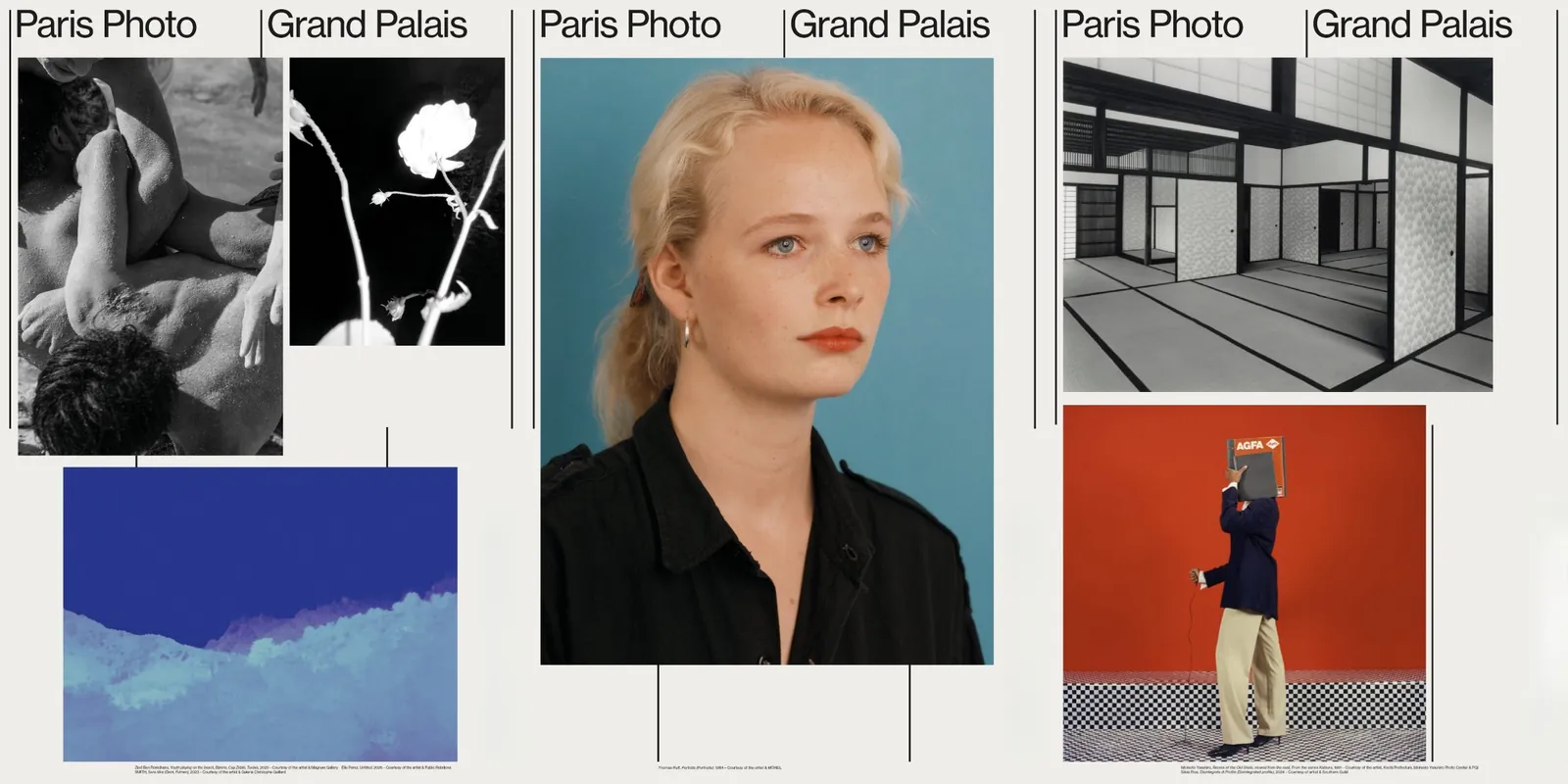
At the entrance, the fair makes its opening statement with a single artist. Thomas Ruff, whose portrait appears on one of this year's official posters, is given a retrospective installation conceived as an open book, a sequence that lays out his experimental approach to image making for everyone who walks in. It is a shrewd piece of sequencing. Ruff's career is a long argument that a photograph is a constructed surface rather than a window, and placing him at the threshold tells visitors how to read everything beyond it: sceptically, and with pleasure.
The sectors at the edges
The fair's newer sectors carry its forward motion. Voices, launched in 2024 and now in its third edition, is given this year to guest curators Zasha Colah and Francesco Zanot, who build their section around the idea of disappearance. The Digital sector, in its fourth edition, passes to curator Marco de Mutiis. Emergence offers twenty solo projects, the fair's wager on where the medium's next decade is being drafted. The Elles and Paris Photo programme, supported by the Ministry of Culture, continues its work of raising the visibility of women photographers across the fair's hang.
The Book sector and its attendant prize remain the fair's quiet engine. The Paris Photo and Aperture PhotoBook Awards anchor a programme of book talks and signings, and the shortlisted titles are exhibited at the fair before touring. Alongside them, the Carte Blanche Students programme, run with the Picto Foundation and SNCF Gares et Connexions, selected four winners from 600 applications: Camille Cellier of the Ostkreuzschule für Fotografie, Jonas Glanz of Hochschule Bielefeld, Jinyong Lian of the Beaux Arts de Paris and Mirjam Reiter of the University of Applied Arts in Vienna. Their work is shown at the Gare de Lyon as well as at the fair, and one of the four will receive the Saif Carte Blanche Students grant to develop a new project. A bicentenary that only looked backwards would be a mausoleum. This one has students in it.
Paris Photo is open from 1pm to 8pm on Thursday, Friday and Saturday, and from 1pm to 7pm on Sunday. Two hundred years after the medium's invention, the fair's wager is that the most honest way to celebrate an anniversary is to hang the whole argument in one room: the first fixed images, the institutions that keep them, the dealers who trade them, the students remaking them. Under the glass roof, the argument holds.